A school for a new industry
The Hunan Porcelain School was established in Liling, bringing education, experimentation and production together.
Liling, Hunan · China
Digital Ceramic Archive · 01—09
What you see is only the surface.
Beneath a transparent layer of glaze, colour, fire and handcraft become one.
Scroll or use the left navigation
Liling has a long ceramic tradition, but its modern underglaze polychrome language took shape in the early twentieth century. Colour was placed beneath a transparent glaze and made durable through high-temperature firing.
The Hunan Porcelain School was established in Liling, bringing education, experimentation and production together.
Black, blue, red, brown and green high-temperature pigments established a new underglaze palette.
Liling porcelain received major awards at exhibitions in China and abroad.
Production returned with expanded pigments, improved firing and new visual languages.
The firing craft was inscribed as national intangible cultural heritage.
A finished piece appears effortless, yet every stage changes what the next stage can become. A small error in shaping, painting, glazing or firing can transform the final object.
Local clay, glaze materials and mineral pigments are carefully chosen.
The material is cleaned, filtered and prepared for a fine white body.
The form is thrown, pressed or cast, then refined by hand.
Moisture leaves the body slowly to reduce cracking and distortion.
The unglazed body is first fired at approximately 800°C.
The composition is painted directly onto the porous bisque surface.
Double outlines control pigment while water creates soft gradations.
A transparent glaze is sprayed over the painted surface.
Heat fuses body, pigment and glaze into one luminous object.
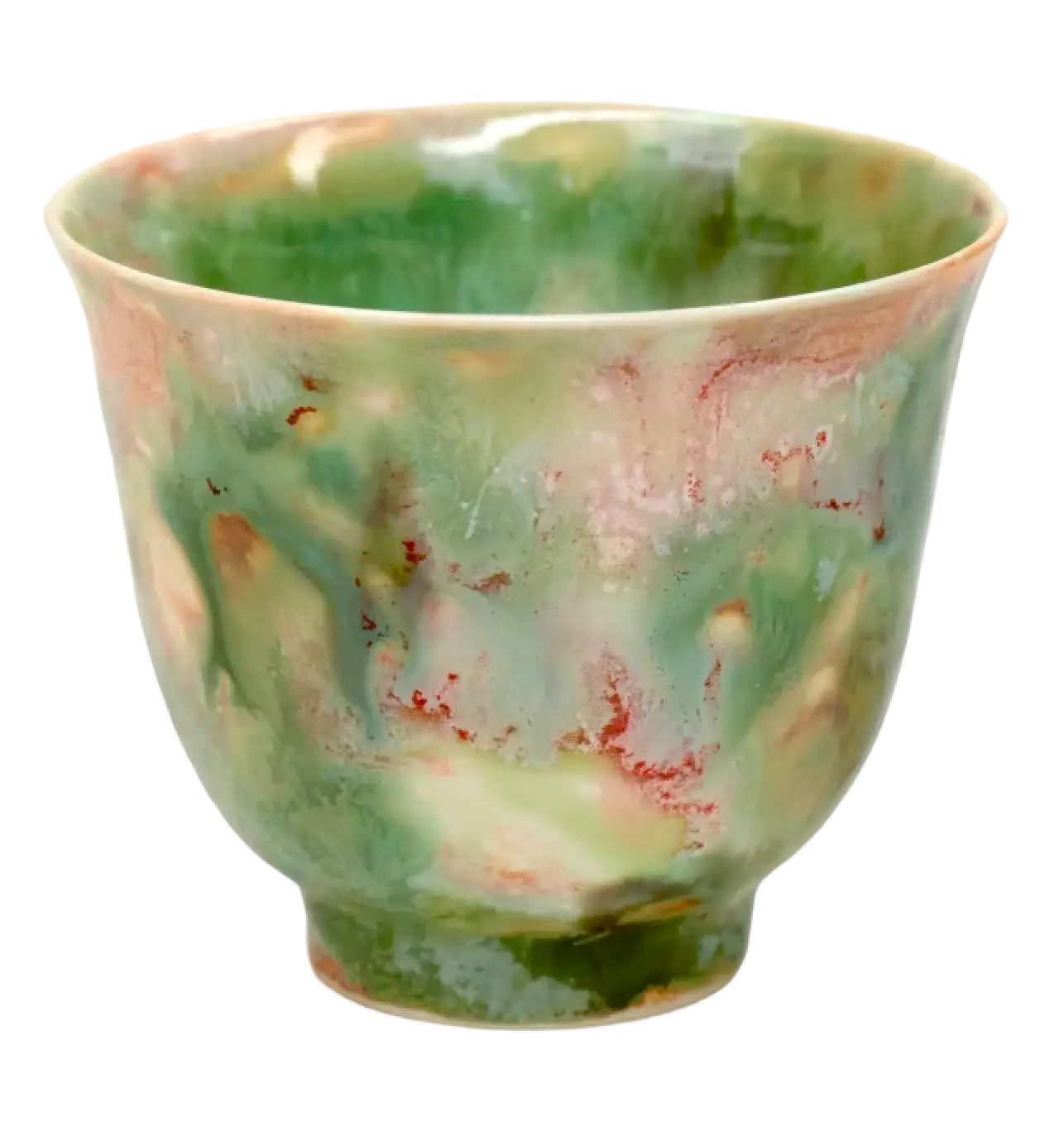
Before firing, the pigments appear quiet and uncertain. Only the kiln reveals their final character.
Outline, structure and rhythm.
Depth, distance and stillness.
Energy, flowers and celebration.
Shadow, soil and transition.
Leaves, vines and living growth.
The painting does not sit on top of the finished object. Transparent glaze seals it beneath a smooth surface and creates the water-like luminosity associated with Liling.
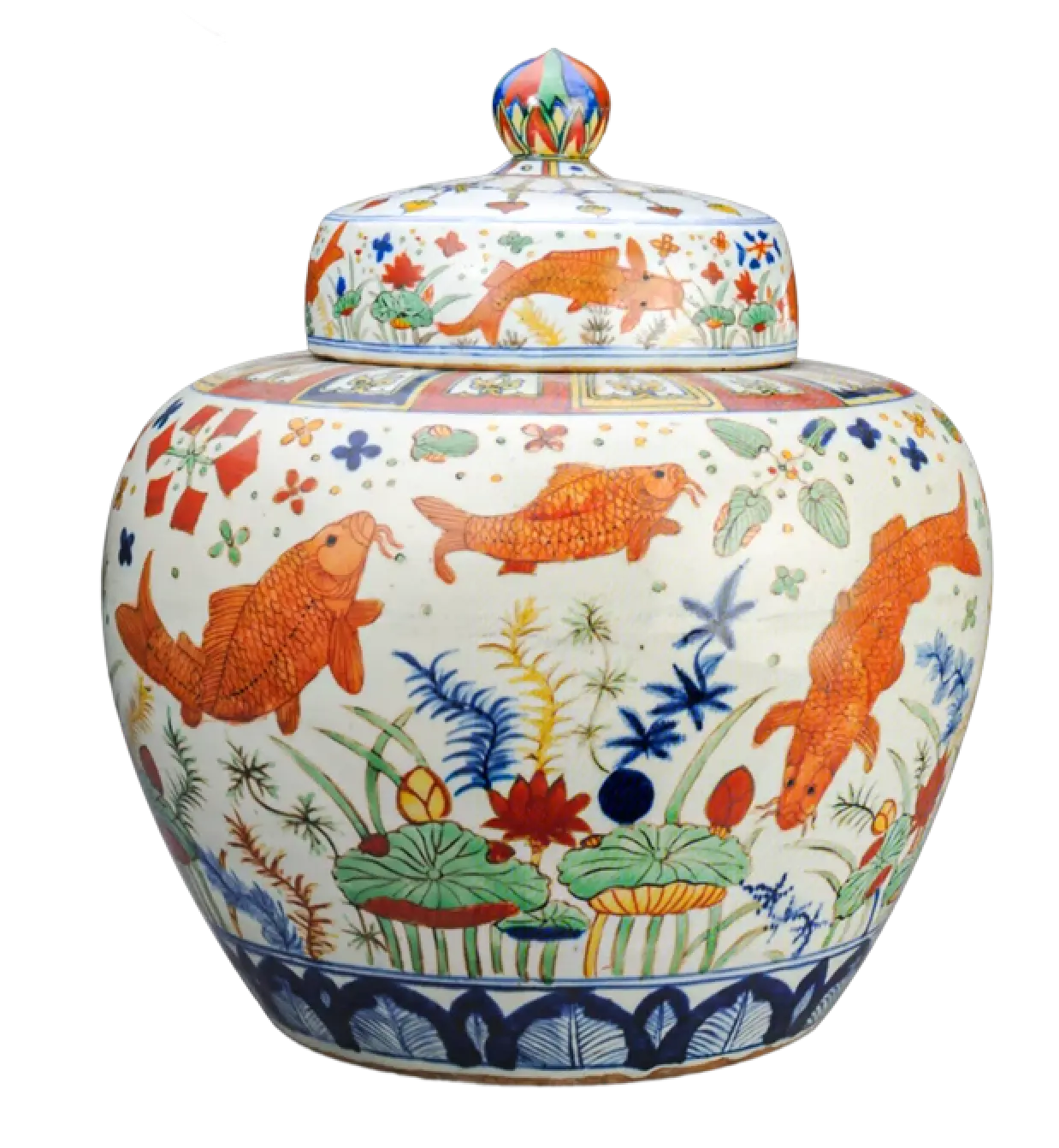
The moment of transformation
1380°C Heat changes the body, melts the glaze, reveals the colour and binds every layer together.Formed and dried.
The body becomes strong enough to receive painting and glaze.
The glaze begins to flow and the surface starts to close.
Pigment, glaze and porcelain approach their final unity.
The true colour appears only after the kiln falls silent.
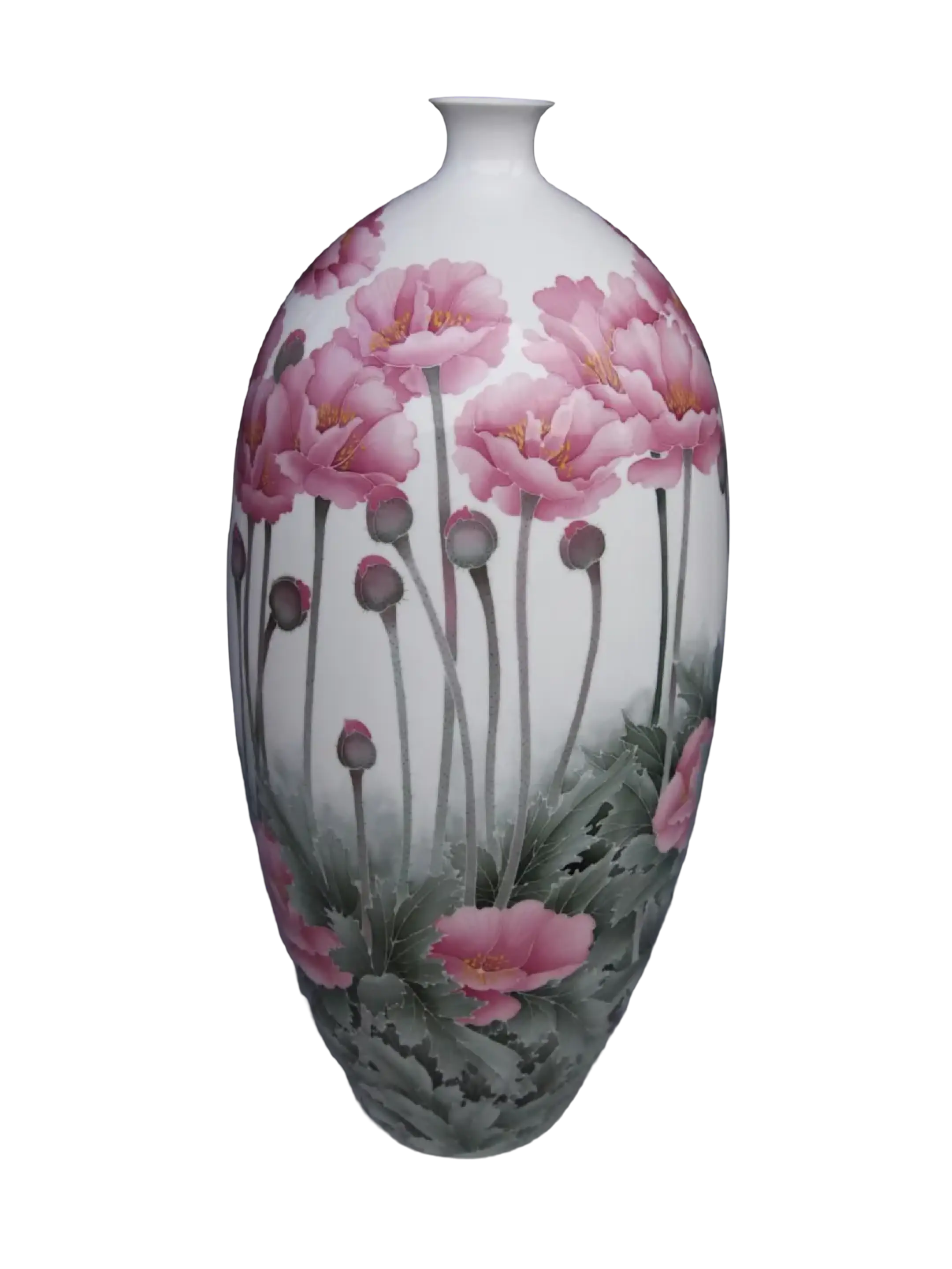
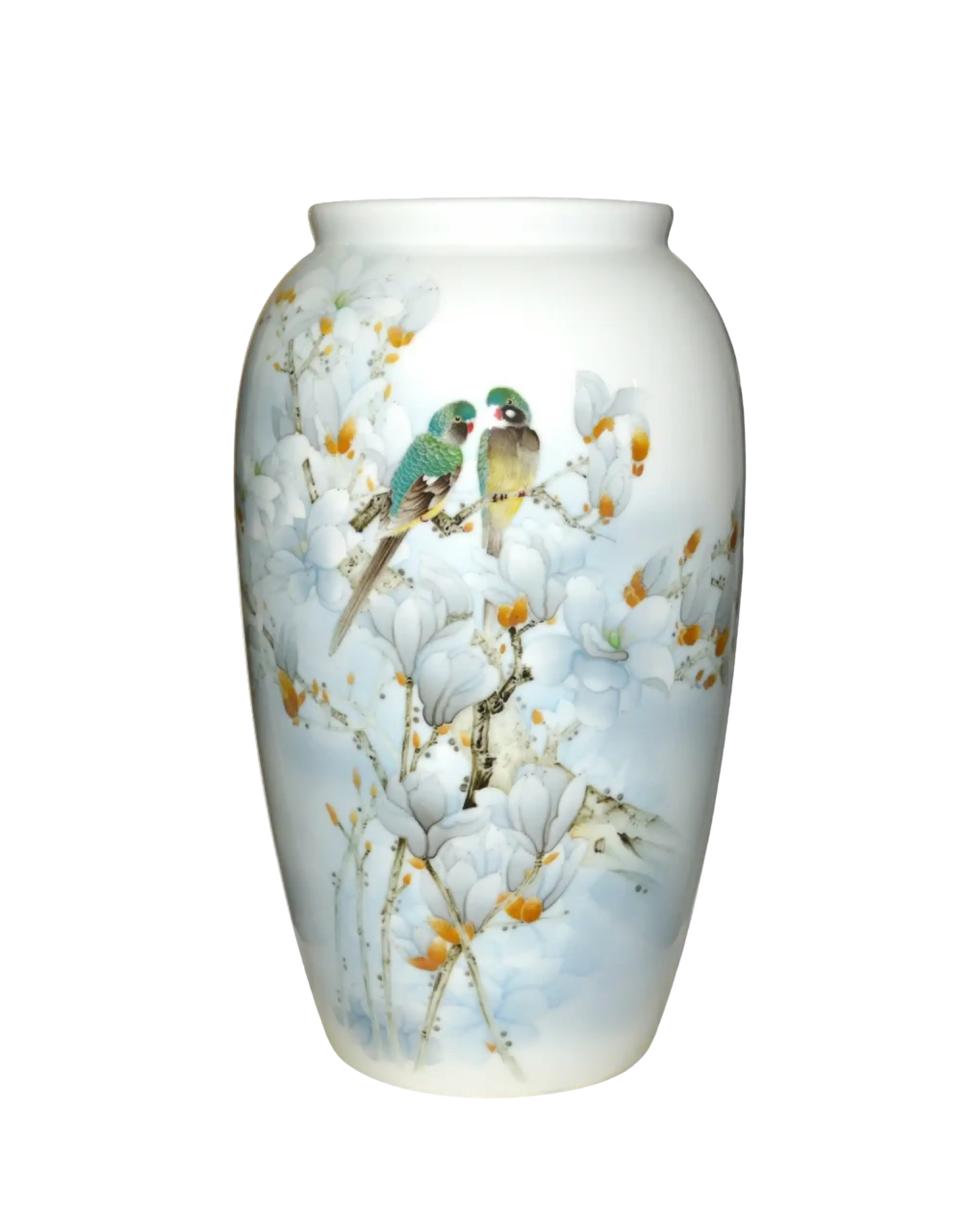
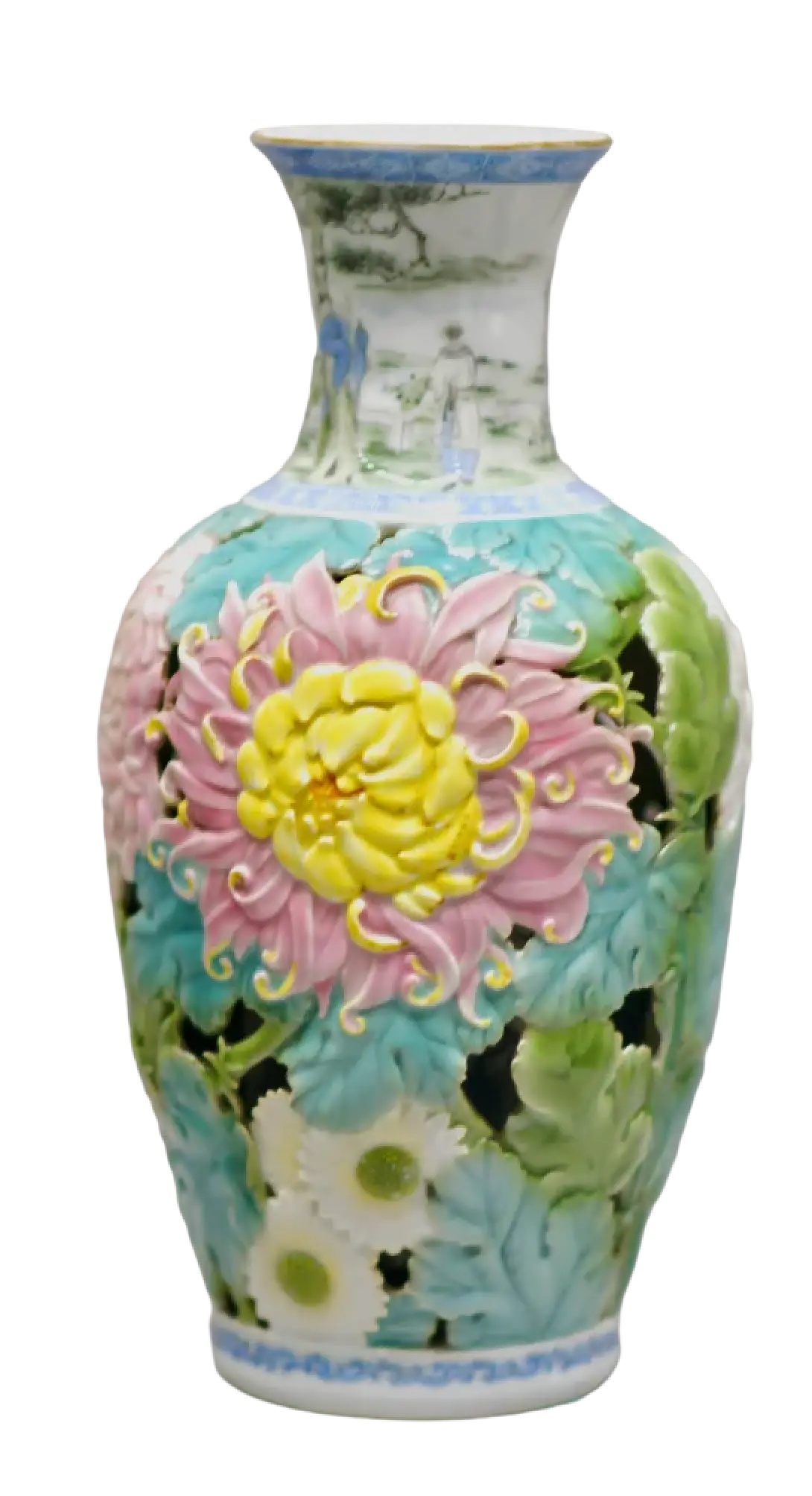
Flowers, birds, fish and landscapes are not simply decoration. They carry ideas of season, character, harmony and renewal.
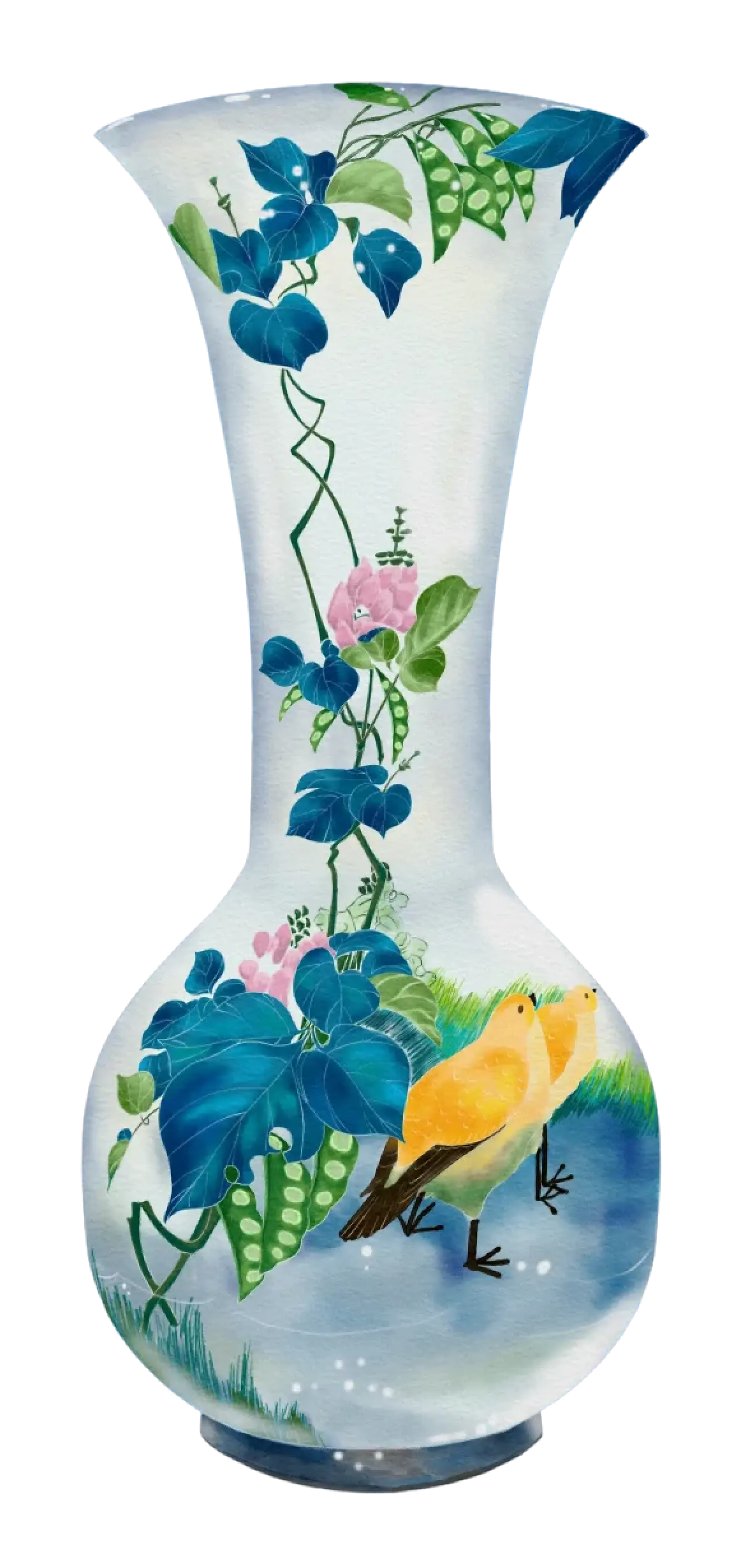
Select an object to open its visual record. Each card expands without JavaScript.
Choose a palette to transform the atmosphere around the vessel. The interaction uses only HTML and CSS.
Choose a firing palette